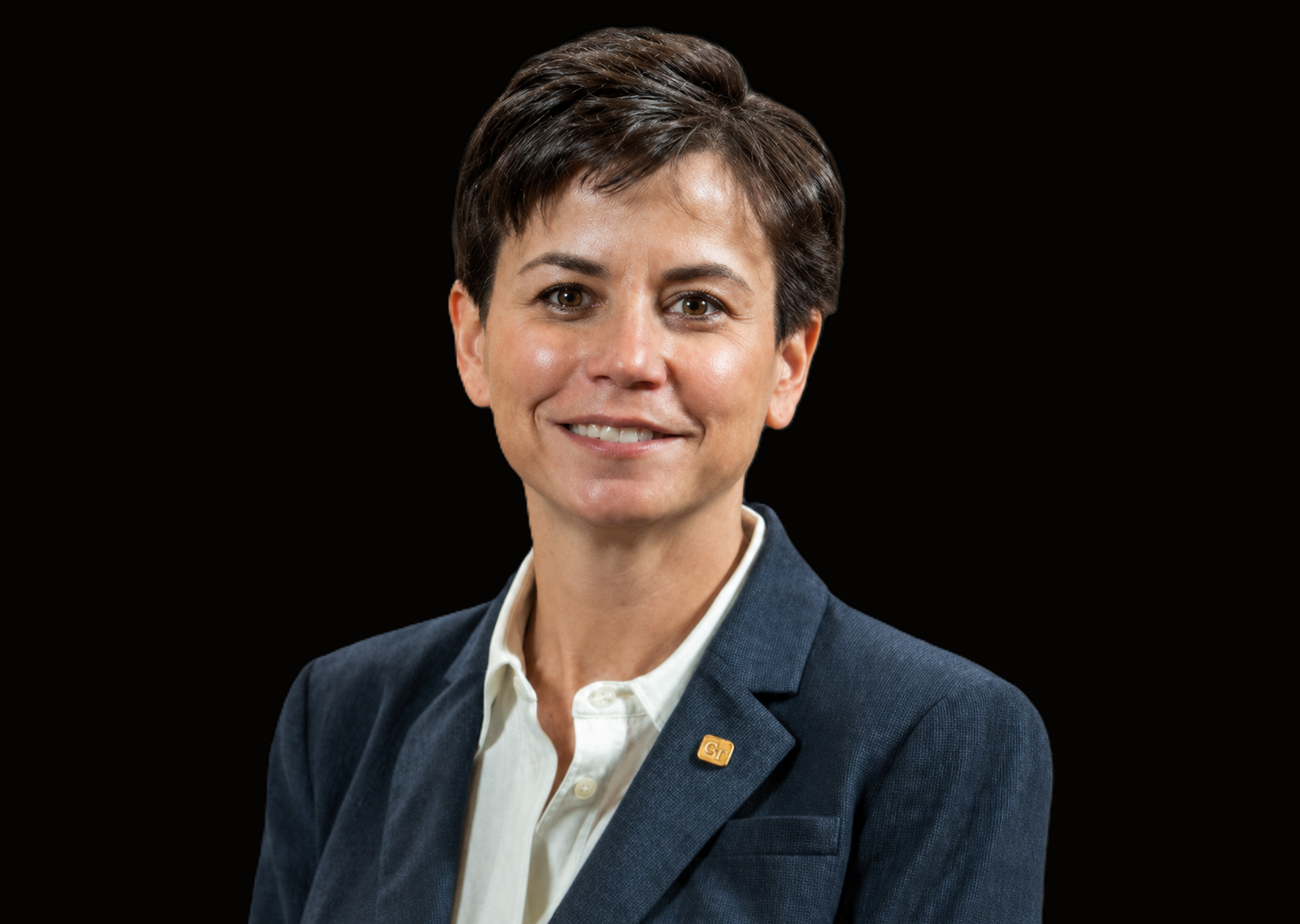
In the second webinar of Dr.Bill’s New-to-Practice series, we welcomed back Dr. Suzanne Strasberg for Building Your Primary Care Practice: Practice Models and Career Paths in Ontario. A comprehensive family physician with 35 years of experience, Dr. Strasberg is a Past President of the Ontario Medical Association, a Past Chair of the Board of Directors of the Canadian Medical Association, and a respected Canadian health system leader and physician advocate.
Suzanne demystified how family doctors actually get paid, and how to match a practice model to the life you want to build. Here are the key takeaways:
- The five ways family doctors are paid in Ontario and their after-hours obligations
- What the "basket of services" means for your income, and the premiums that reward enrolment
- Three ways to enter practice: locum, associate, or owner
- What changed under FHO+ in 2026
- A simple framework to pull it all together
Choosing family medicine is one of the best decisions you can make but few new grads are taught how the business behind it actually works. In Ontario, every family doctor is paid through one of a handful of models, and the one you choose shapes your income, your obligations, and your day-to-day life. Here’s a plain-language guide to your options.
How Ontario family doctors get paid: the five models
Models fall into three broad buckets: traditional fee-for-service, enhanced fee-for-service (the “patient enrolment models” CCM and FHG), and blended capitation (FHN and FHO+).
One important update: as of April 1, 2026, the Family Health Organization model was modernized under the 2024 Physician Services Agreement — you’ll now hear it called FHO+.
| Model | What to consider | What’s expected | Best fit |
| FFS | Billed per service to OHIP, set by the Schedule of Benefits; No visit = no payment; your income tracks volume directly | No roster, group, or after-hours minimum. | Physicians working in walk-in clinics, ER, GP-focused practice |
| CCM | FFS for all services provided as per SOB; Comprehensive Care Management (CCM) fee; Preventive care bonuses; Out of Office bonuses; Unattached Patient bonuses; After hours premium | Enrol patients, provide their comprehensive care, and offer one 3-hour after-hours block a week. | Comprehensive family physicians who do not wish to practice in a group model |
| FHG | Fee-for-service +15% premium on enrolled-patient core visits; Comprehensive Care Management (CCM) fee; Preventive care bonuses; Out of Office bonuses; Unattached Patient bonuses; After hours premium | Three or more physicians; enrol patients and share after-hours that scales with group size. | Busy physicians who want FFS upside (no negation) with group stability and shared after-hours |
| FHN | Monthly capitation per rostered patient, age, sex and complexity adjusted. Annual base/capitation rate $149.60. Smaller in-basket of services. Shadow billing; Comprehensive Care Management (CCM) fee; Preventive care bonuses; Out of Office bonuses; Unattached Patient bonuses; After hours premium; Access bonus (negation). | At least three physicians; roster patients, share after-hours, and keep care in-group (access bonus and negation still apply). | Procedure-heavy physicians |
| FHO+ | Monthly capitation per rostered patient, age, sex and complexity adjusted. Annual base/capitation rate $164. Shadow billing; Comprehensive Care Management (CCM) fee; Preventive care bonuses; Out of Office bonuses; Unattached Patient bonuses; After hours premium. Hourly billing for direct and indirect care. Continuity of care. requirement. | At least six physicians (two per site); roster patients and keep ≥75% of visits in-practice (the new Continuity of Care measure). | Comprehensive care family physicians wanting stable income and compensation for clinical and indirect work. |
Most comprehensive family physicians have moved away from pure fee-for-service, because a patient-enrolment model almost always pays better for traditional family medicine.
What the “basket of services” means for your income
Fee-for-service pays you per visit; capitation pays you to care for a patient over a whole year. The "basket" is simply the bundle of everyday services that monthly payment already covers — your routine office primary care, adjusted for age, sex, and now complexity, so older and sicker patients are worth more. The key idea: you get the same monthly payment whether you see that patient once or thirty times, and across a roster your well patients balance the time you spend on your sick ones.
Knowing what falls outside the basket is where capitation physicians protect their income. Out-of-basket services — prenatal and diabetic care, STI counselling, certain procedures, palliative care, home visits, and surgical assists — are billable separately. "Shadow billing" lets you record in-basket work as you would in FFS, both for accountability and for extra income (about 30% in an FHN, 50% in an FHO+).
The premiums and bonuses that reward enrolment
On top of your base model sits a whole layer of premiums and bonuses — and because most reward enrolment, capitation and enhanced-FFS physicians benefit where pure fee-for-service doesn’t:
- Attaching new patients: as a new grad, attachment bonuses of roughly $150–$270 per rostered patient, scaled by patient age and your office’s RIO score, plus one-time fees for complex, vulnerable, or recently discharged patients.
- Caring for your panel: recurring preventive-care bonuses (childhood immunizations, flu shots) across all models, plus paps, mammograms, and colorectal screening in enhanced-FFS models, and chronic-disease incentives for diabetes, heart failure, and serious mental illness.
- Special-care premiums: in-office obstetrics, labour and delivery, palliative care, home visits, and long-term care.
- Automatic add-ons: a 15% geriatric premium for patients 65 and older, plus the age- and sex-adjusted CCM fee.
A Family Health Team is not a payment model
A common misconception is that a Family Health Team (FHT) is a way of getting paid but your group must already be an FHO or FHN to become one.
What the FHT adds is government-funded overhead and a team of allied health professionals (nurses, dietitians, social workers, pharmacists, and mental-health workers) wrapped around your practice, freeing you to focus on the work only you can do.
How after-hours obligations really work
Every patient-enrolment model carries an after-hours requirement, and all group models require a minimum of three blocks a week. “Evening” means Monday to Thursday starting between 5 and 7 p.m.; “weekend” means Friday evening, Saturday, or Sunday. You’re paid a premium for it — 30% more in CCM, FHG, and FHN, and 50% more in FHO+.
The most important thing to understand is that the requirement is a group total shared across all physicians, not carried alone. Requirements scale with group size and are shared across the group, so a bigger group means a lighter load each.
The Ministry can waive or prorate the requirement when more than half the group already provides qualifying after-hours work (hospital ER or anaesthesia call, deliveries, in-patient, palliative, or long-term care). Northern and rural groups are capped at five blocks a week.
Three ways to enter practice: locum, associate, or owner
Your payment model is only half the picture. How you enter practice shapes your risk, income, and flexibility just as much — and these are independent of your payment model, so you can do any of them in any model.
Locum — the lowest-risk start
- Locuming means stepping into someone else’s practice to cover a leave or on an ongoing basis. No startup costs, you earn right away, and you're eligible for after-hours premiums in all enrollment models (the FHO+ hourly rate applies too).
- The ideal way to test clinics, communities, and models before committing — and it often converts to a permanent role.
- The trade-off: you're not building your own roster. For undecided new grads, think of it as a runway, not a lost year.
Associate — build your practice inside someone else’s clinic
- You bill under your own number and build your own roster, but pay the owner a percentage of billings (75/25 is common) for space, staff, EMR, and supplies.
- Less risk than ownership, with full access to premiums and bonuses. Clarify what the split covers, whether it applies to premiums and third-party billings, and who owns the roster if you leave.
- In capitation, ask about a first-year income stabilization program (roughly $204k, or $224k in higher-need areas) that guarantees income while you roster.
Owner — buy in or build from scratch
- Buy in and you inherit the roster, equipment, and staff (confirm what's included), plus a six-month re-rostering guarantee in capitation: income from day one, but capital upfront.
- Build from scratch and you skip the buy-in but carry overhead while your roster fills. This is best in high-demand or underserved areas, where attachment bonuses and income stabilization cushion the lean early months.
- Either way, ownership gives you the most control — and all of the financial risk.
What changed in 2026: continuity of care replaces negation
Capitation models used to pay an access bonus and reduce it when enrolled patients got everyday care elsewhere — a mechanism called negation.
As of April 1, 2026, FHO+ replaced both with a Continuity of Care measure: keep at least 75% of your patients' in-basket visits in-practice, or a 15% capitation reduction applies until you recover. It's meant to be supportive rather than an automatic clawback. (FHNs still use the older access-bonus system.)
Don’t leave money on the table
Wanting to earn a good income and being a caring, compassionate doctor are not mutually exclusive, and no one looks after your money like you do. Studies show physicians fail to bill for at least 5% of the services they provide, which can add up to $15,000 or more a year in work you did but never claimed.
The money tends to leak through unbilled add-on services — tray fees, injections — and version-code rejections left uncorrected.
Build the habits that protect your income:
- Keep a one-page cheat sheet of your most-used codes and premiums.
- Bill after each patient encounter, while it’s fresh.
- Confirm the health card and coverage at the start of every visit. This is the single biggest cause of rejections.
- Follow up on rejected claims immediately, before they “over-age”.
A simple framework to pull it all together
When it’s time to choose, three questions get you to a candidate model and path:
- Commit, or keep exploring? If you want flexibility, locum. If you’re ready to commit, keep going.
- How do you want to be paid? Per visit with maximum freedom (FFS — mainly GP-focused or walk-in work); fee-for-service plus enrollment perks (CCM solo or FHG in a group); or stable monthly income that also pays for your time (FHN or FHO+).
- How will you enter? As a locum, an associate, or an owner.
Answer those three and you’ve got a candidate model and a path — then pressure-test it.
Before you sign anything, get it reviewed by a lawyer — we covered contract terms in detail in our first session.
What’s next?
You don’t have to have all of this figured out on day one. Pick the model and path that fits the life you want, ask the hard questions before you sign, and let the choice evolve as your priorities do.
Missed the first session? Our recap of Your First 90 Days in Practice in Ontario covers contracts, burnout, and billing essentials. And to help you start billing with confidence, Dr.Bill is offering all new-to-practice physicians three months of complimentary service on our Comprehensive Plan when you sign up before September 30, 2026.
Download the new eBook
Our eBook can help you learn where to find locum jobs, what compensation to expect, which contract points may be up for negotiation and how to bill for your services.