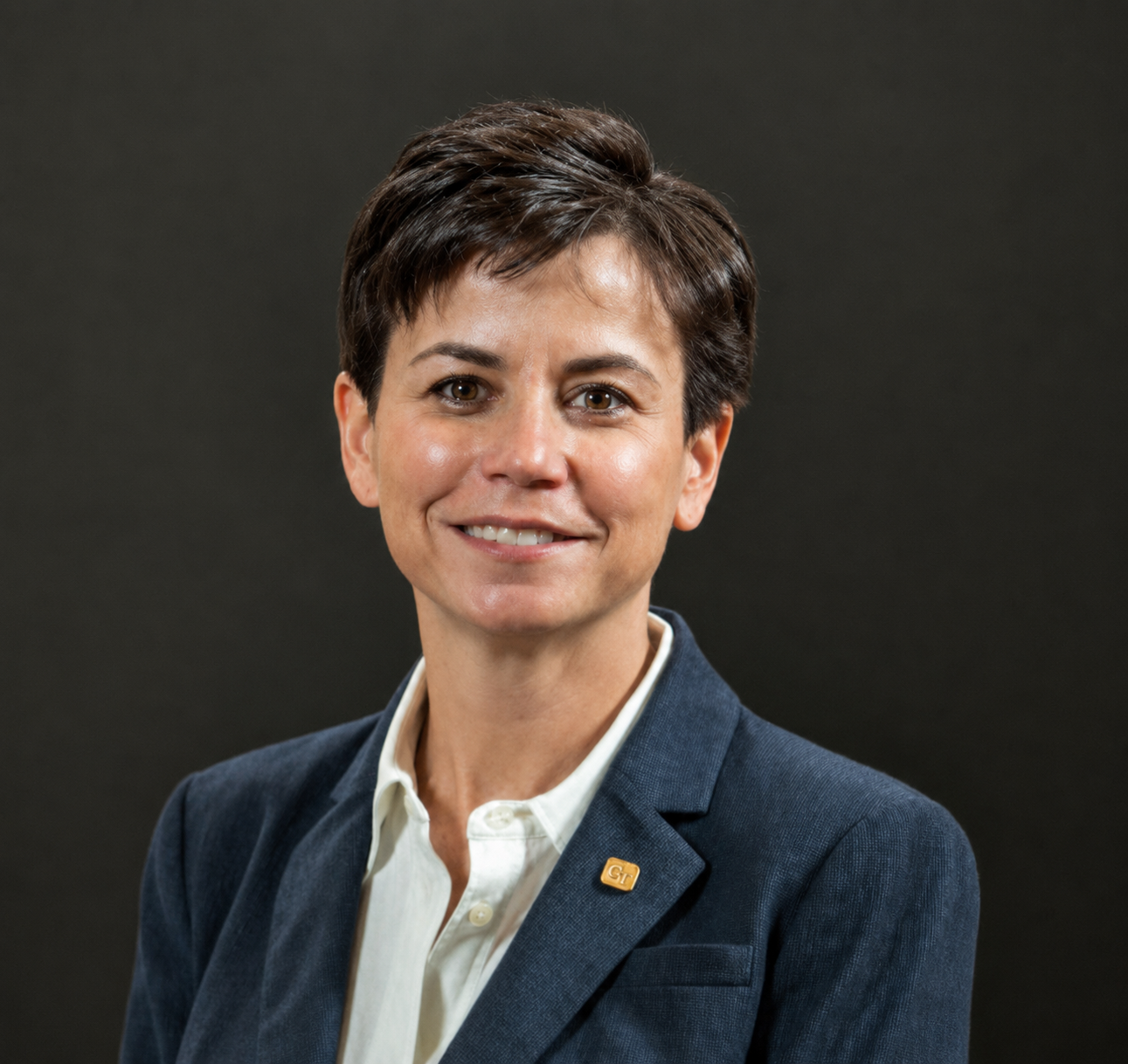
 Dr. Suzanne Strasberg
Dr. Suzanne Strasberg is a family physician whose past leadership roles include Chair of the Canadian Medical Association, President of the Ontario Medical Association, and OMA Co-Chair of the Family Health Organization (FHO) Model Development Committee. Drawing on extensive experience in physician leadership, health policy, and practice management, Dr. Strasberg shares practical insights to help new physicians build sustainable, successful careers in practice.
This webinar is best for:
New-to-practice primary care physicians in Ontario
What you'll learn
- An overview and comparison of primary care payment models like CCM, Fee-For-Service, FHG, FHO+ and FHN
- How to choose which primary care model is right for you
- Options for starting your career - locum, associate, owner
Welcome & Acknowledgements
Hello, and welcome, everyone, and welcome back to anyone who joined us on our first webinar last week. My name is Chris Hanscomb, and I'm a Senior Medical Billing Consultant at Dr.Bill.
For those of you who may not be familiar with Dr.Bill, we're a medical billing platform designed to streamline your billing and optimize your earnings. Whether an MOA supports you and your billing or you do it yourself, we've got the time to bill down to 16 seconds of claim so and your team can spend more of your day focused on patients.
You're probably not surprised to hear that that every year at Dr.Bill, we hear similar concerns from physicians entering independent practice, especially from family doctors.
We hear that you're concerned about leaving money on the table because billing can be extremely complex when you're dealing with such, an onerous, an enormous breadth of conditions in family practice. But, essentially, we hear again and again that many physicians have received training, yet you're expected to run a business, successfully on day one and training about billing specifically.
That's exactly the gap this new to practice webinar series is designed to fill and why I'm happy to introduce Dr. Suzanne Strasberg.
She's a family physician with 35 years of experience, and she's here to provide some foundational information on practice models, billing, and running the business side of your family practice.
Suzanne is a legend in Canadian medicine, serving six years as board chair of the CMA, and she was also a founding member of the Coalition of Family Physicians of Ontario and past president of the OMA. And with that, I'll pass things over to you, Suzanne.
Thanks, Chris. I don't know about the legend part, but, thanks very much for the introduction. Welcome, everyone. Congratulations, first and foremost, on, transitioning to practice and finishing your, family practice residency. That's a huge, huge accomplishment. I remember the day that, I finished and, the the feeling of freedom walking out of the doors on, July 1st from Toronto General Hospital.
That lasted a few days, and then I realized I had to start thinking about how I was gonna make a living and where I was gonna practice and what I was gonna do. So I'm Suzanne Strasberg. I'm your host for today's session. I'm a comprehensive care family physician.
I've practiced for 35 years. I practiced for the last 15 or so as the physician lead at the Jane Finch Family Health team in Toronto. And I've also held roles in health system leadership and physician advocacy for about two decades, including being president of the Ontario Medical Association and chair of the board of directors of the CMA and MD Financial. And probably relevant for today's discussion, I was the co chair for the FHO Model Development Committee when we, originally developed that, almost, 20 years ago.
So I just wanna say again congratulations.
Choosing family practice is one of the best decisions that you could ever make. After 35 years of practicing, I still love it.
If I had to do it all over again, I would choose to do the exact same thing.
In fact, my, greatest wish was that my daughter would, choose to go into family medicine go into medicine and then go into family medicine and join me in practice, and I started to brainwash her as soon as she could understand English.
When she was fourteen, I said to her, when you grow up and you're a doctor, and she looked at me and she said, you have no idea what I'm gonna be when I grow up. So, after that, I stopped the brainwashing, and, unfortunately, she chose a different career path. She's doing a PhD in chemistry, but I think that was a miss for her, if I'm really honest.
So today, we're gonna give you some straightforward practical guidance. I wish someone had handed me on day one.
I was if some of you were on the webinar last last week, you will have heard that I said I was supposed to be a plastic surgeon.
I was trying to get pregnant, and I couldn't get pregnant. And, my dad, who is a surgeon, always said to me, only be a surgeon if it's the only thing that'll make you happy. It wasn't the only thing that will make me happy. It was the only thing that makes him happy.
So I decided not to do that and moved back to Toronto and joined, someone's practice. A friend of mine had said, there's this guy, at Jane and Finch. He's looking for an associate. He's a really good guy.
You'll be busy from day one. So I stepped in and started working, but, I didn't negotiate, the split that I was paying him. I didn't negotiate time off. I didn't negotiate my hours or third party billings.
I did not sign a contract to protect my, my interest. I just went in blind.
Now, luckily, it worked out for me, but I definitely would not advise that for you.
So today, we're gonna talk about the primary care model landscape. So we're gonna talk a little bit about, the different models, what's the same, and what's different between between models.
I hope I'm gonna help you understand how you get paid in every model and what's expected of you, what the, after hours requirements are, and some of the benefits of the different models. And then just quickly, a little bit of a discussion about the ways that you can enter practice and a simple framework to help match all of the all of the things you might wanna consider, including the lifestyle that you're you're hoping to, build.
If you're like me, you, may take notes furiously. You do not have to. We will email you, everything afterwards along with a one page summary.
And, if we haven't covered off some of the questions that were submitted at registration, we will cover them off during the dedicated Q&A time at the end. And you can feel free to enter other, questions, into the question area, and we'll try to get to them.
Just before we start, I wanna say that there is a lot of information that we're going to be, speaking to you about today.
Please don't feel overwhelmed.
We're going to leave you with a lot of, with a one page resource, with a lot of links to a lot of good information.
I wanna commend you for getting informed. I wanna tell you that most practicing physicians don't know a thing about the primary care models they're working in, don't understand the intricacies of it, and leave money in on the table, as a result.
One thing I did say last week and I believe to be true is that I think that we fail our learners by not providing them any financial or business literacy in, in school. We teach you how to be doctors, and you do the doctor part really well, but we don't teach you how to be business people, and that's really a shortcoming of the education.
So next slide, please.
The Primary Care Model Landscape
So just a quick overview of the primary care models. Every family doctor or someone that has a 00 billing number in Ontario is paid one of several ways, either through fee for service, which is not really a model, or through a patient enrolment model or what we call a PEM. And it's broken down into enhanced fee for service models and blended models.
The enhanced fee for service models are just that. There are fee for service models with a little bit of capitation of which the solo physician model or the CCM model is one and the family health group (FHG) is the other.
And then there's what we call blended models or capitated models, and they're the family health network and the family health organization or FHO. And they're mostly capitated models, but there is some fee for service. So it what you would eventually decide is do you wanna be primarily, paid in fee for service, or do you wanna be primarily paid through capitation? And we'll go into that.
One important update is that as of this past April first, the full model was modernized under the, 2024 physician services agreement, and some people will refer to it as FHO+ now. But everything I tell you about the full today is really, reflects the new FHO+ rules.
Next slide, please. So we're gonna examine each model. And, if there's questions at the end or if I'm not clear about something, please feel free to put it into the Q&A.
Next slide.
Fee-For-Service (FFS)
So fee for service, it's probably the simplest to understand. Patient comes in. You see them and provide a service, and you get paid. You get paid straight straight out of the schedule of benefits.
If there's not a visit, there's no payment. So, really, your income tracks to, your volume directly.
What are some of the benefits? Well, there's no roster. You don't have to work in a group. There's no enrollment. There's no after hours requirement, but there's also no premiums. There's no after hours bonuses.
And if you're going into traditional family practice, what we like to call comprehensive care family practice, you'll make much more money in a a primary care model. So that's why comprehensive family physicians have moved away from pure fee for service. Where will you still see it? You'll see it in walk in clinics. You'll see it in people working in the emergency department, and you'll see it in things like GP focused practice, so people who are doing sports medicine or GP psychotherapy. In some communities, they have GP dermatologists. That's that's where you'll see straight fee for service.
Next slide, please.
Comprehensive Care Model (CCM)
So when I started out, all physicians were paid in fee for service, and the fees were low.
So when the OMA would negotiate a two percent across the board fee increase, family doctors would see forty eight cents on a visit.
And that frustration made people, one, hate being family doctors, and it's what drove me, into medical politics. And I got involved with a group called the Coalition of Family Physicians, and we were a pain in the side of the Ontario Medical Association.
And after about four or five years, we decided to run three people for the OMA board. There were eight people running, and the three people from the coalition of family physicians came first, second, and third. And some of that was because we were reflecting the, concerns and the frustration of family doctors working hard and getting paid lousy. So we pushed the Ministry of Health to develop primary care models that we see today, and I think the, certainly the fees and the remuneration have improved greatly, and the the joy of practicing in family medicine, has also really improved.
So the first model I wanna discuss is called the comprehensive care model. It was created about twenty years ago, and it was created for physicians who want some of the benefits that came with enrolling patients but didn't want to join a group.
So, basically, it's a primary care model for solo docs. You bill fee for service on everything. You get a small, monthly capitated fee, which we call the CCM fee.
It's about $2.88 per patient average on your enrolled patients.
You get some of the bonuses that you can see on the screen in front of you.
And in exchange for that, you have to enroll patients and, provide comprehensive care along with one 3-hour block a week of after hour service.
Who does it fit best? Comprehensive care family physicians who don't want to practice in a group model. And I gotta tell you, there's only about 200of them in the entire province.
Almost for certain, if you wanna provide, if you wanna go into comprehensive care and be paid, primarily in fee for service, you'll be in the next model that we talk about, the family health group. And that's because there's no bonus on daytime fees in the CCM model that you get in the family health group or the FHG.
Next slide, please.
Family Health Group (FHG)
So like I said, if you're in comprehensive care, you're, and you wanna be in, enhanced fee for service, you're probably in a FHG. What's required? Three or more physicians.
Your daytime codes, which are approximately thirty four codes, receive a 15% premium when you see a patient. So if a patient you see a patient service code pays $20 dollars, you get a 15% premium right on top of that automatically paid an extra $3 for seeing your enrolled patients.
That's rising to 20%, in 2027.
You also get the CCM fee that I was talking about, and that's paid automatically monthly.
And you, have access and are able to build the build the preventative care bonuses and the out of office bonuses. We'll go into those a little bit later on your enrolled patients.
It's a good fit for people who like the fee for service upside, who wanna work hard.
There's a 30% premium on top of the 15% premium when you see those patients after hours, so after 5 PM or on weekends.
And you don't have to share an office with anyone like you have to in some of the capitated models, and there's no negation, which means if you aren't in your office and your patient goes to a walk in clinic, you're not penalized for that.
There's a little bit less income stability than in a capitated model. If you don't work, the only capitation or or monthly payment that you receive for the time that you're away is the CCM fee, that $2.28 average fee on your enrolled patients.
Next slide, please.
Family Health Network (FHN)
So now we'll move into the capitated models, and I'll talk about, very quickly, I'll talk about the Family Health Network.
It's, a capitated model. Most physicians in the province do not practice in it. They practice in the Family Health Organization or FHO. Why?
Well, the basket of services so the, what you're getting on a monthly basis for each rostered patient is smaller than in a family health organization, and the amount of of the payment is smaller. So you get approximately $149 a month.
Who's it good for? Well, if you're a procedure-heavy physician or you're doing some of the things that are out of basket in the FHN but in basket in the FHO, it may be worth your while. So especially in, some rural areas, physicians, for instance, are providing chemotherapy infusions, and that pays very well. And that's out of basket in the FHN and in basket in the FHO. But most of us will never do that, and we still get paid for it in the FHO, and that's why most doctors prefer the larger basket.
In a family health network, you're required to shadow bill. So what does that mean? Well, when a patient comes to see you, you would bill OHIP the exact same way that you bill, if you are in fee for service.
And for that, you're provided approximately 20% on your billing. So if you shadow billed for $1,000 in a day, you would receive $200 as a extra income for doing that shadow billing. And that's an accountability measure for the government. That way they know that you're actually seeing patients that they're paying you to see and not spending all your time, elsewhere doing other work.
Again, what's, required? Well, you got to have three doctors. You're expected to roster patients. You're expected to commit to comprehensive care as as you are in all these patient enrolment models.
You have to you want to see your own patients or have patients in your office see or your group see the patients. Otherwise, your access bonus is reduced, and I'll get into that in a minute.
The access bonus is money that the government pays you on top of your base rate. So I said that it's approximately $149 for a patient per year for the services that are in basket.
Well, the access bonus is 20% on top of that. So the government gives you approximately another $28 per patient that they hold back. And if your patients do not see physicians outside your group for in basket services, like checkups, coughs and colds that they would come into the office for, then that money is returned to the group twice a year.
If your patient does go and see another GP or family doctor for a service that's in basket, then your access bonus is reduced dollar for dollar to a floor of zero. So if your group was entitled to $25,000 of access bonus and you had $5,000 of outside use, your access bonus over six months, you would receive $20,000
If the outside use is $40,000, your $25,000 would be lost, but the additional $15,000 of outside use would not be applied, to the group.
It's a little bit complicated, but, I hope I explained that. And if I didn't, explain that clearly, please let me know in the chat. Again, it's not as important because most doctors are practicing in the full model, and the full model no longer uses access bonus.
So, again, this model is good for, procedure heavy docs, people doing a lot of injections, nerve blocks, allergy testing, complex house call visits, or things like chemotherapy that I mentioned that are outside the FHN basket but inside the FHO basket.
One of the, downsides of the fin and why people don't, wanna practice in it as much as the FHO basket is, one, there is not the new $80/h hourly fee that the FHO has just, has just been introduced into the FHO model, and that's a lot of money every day, and I'll I'll get into that.
And in addition, the after hours bonus for FHN physicians is 30% and for FHO doctors, it's 50%. And why there's a difference? I don't know. It doesn't make a lot of sense, but it it's a significant amount of money, over a year.
Let's move now on to the FHO.
Family Health Organization (FHO+)
So it's now called FHO+, but it's basically the FHO model. And as of April 1st it was modernized.
You now, get an an hourly payment, which has never ever been, available in primary care, and it and it's a really big deal in my opinion.
You are allowed to $80/h in addition to the fees and in addition to the shadow billing for in office care, whether it's face to face, with your patient or whether it's virtual, telephone, or otherwise, you're allowed to bill $68/h for care provided, when you're outside the office to patients.
And for this direct care, you can for every three hours you provide, you can provide, you can bill one hour of indirect care. So if you see, you you work six hours a day, you can bill another two hours for charting, doing forms, looking at your inbox, and approving tests or diagnostics, coordinating care with with families.
So, you know, in a in a day, a lot of doctors are billing $1,000 in addition to what they're, receiving through their capitation.
Shadow billing here is more generous than in the FHN. It's 30% on your daily visit. So instead of getting $200 a day on $1,000 shadow billing, you get $300 a day.
And you get 50% on select procedures rather than 30% percent, and hospital work is now paid at 100%.
There is something in both the, FHN and the FHO called the fee for service cap, and I just wanna explain that very quickly.
If you decide that, you're gonna work in another office and you're a signatory to one of these models, you're allowed to bill up to close to $60,000 per year on in basket services to non-enroled patients.
So if you're going to work in a a walk in clinic to help top up your, fees, and your income, you can bill up to $60,000, on services that are in basket that the government's already paying you for to see on your enrolled patients for non-enrolled patients. And that's times the number of physicians in your office. So if there's ten docs in your office, it's $600,000. So if one doctor only bills $30,000 there's an extra $30,000 available for the other physicians working outside office. And that's just in basket fees. So if you're working in emerg or you're doing OR assisting, that's in addition.
What's what's required? There's a little bit more stringent requirements here. There's a colocation, requirement. So you have to have a minimum of six physicians, and, there has to be a minimum of two of them in each location.
Like all other PEMs, you have to, register and commit to provide their comprehensive care.
You have to provide after hours, which scales by size.
And there's a new continuity of care requirements, and I'll go into detail about that. But that's what replaces the access bonus in the, in the, FHO that the FHN now has and has always had.
The best fit, I really think this is a great model. I've loved practicing in it. I've practiced in fee for service. I practiced in a FHG, and I now I'm practicing in a FHO. And I I really like the stability of income.
I love having the compensation for clinical, and indirect work. And I never took a two week holiday in my life until I went into a capitation. Because when you go away in fee for service and you have no income coming in and you come back, you still have to pay your staff. You still have to pay your overhead. And this just makes it a little bit less stressful.
Next slide, please.
How Capitation Works: "The Basket"
So just a little bit, of education about how the basket works.
Fee for service, self explanatory, pays you per visit. Capitation pays you to care for a patient over a whole year.
And the basket is simply the bundle of everyday services that the monthly base premium already covers. So I mentioned it was about $149 for a FHN and about $164 for the FHO.
Well, there's a 119 codes in the basket and the FHN and about $164 in the FHO.
The in basket is, age and sex adjusted along with complexity. So the older or more, ill or or patients with more, comorbidities, the more you're paid for that patient for the year. So a young fourteen year old boy may be worth I don't wanna I don't like the word worth, but maybe paid out at, $76. An eighty seven year old woman may be paid out at $350 a year.
But the average is about $164s for the foe.
Now on top of the things that are in basket for the for the foe, there is defined out of basket care. So if you do prenatal care in the office, you provide diabetic care, you do palliative care, Certain home visits if the patients are considered complex and vulnerable are all out of basket. And that means you can bill fee for service for them, and you're paid at the schedule of benefit rates.
The other thing that, is good to know is that weekends are out of basket. So for instance, I worked almost every Sunday, and people would say, well, why do you work on a Sunday?
Well, you get paid approximately $40 for for a code on a Sunday plus a 50% premium, that's $60 a patient.
You can come in and work, three or four hours, and you can make as much money as you do in an eight hour shift, sometimes more. And for me, it just made a lot of sense. And I would take a different day off during the week.
One of the things I would do when I was young and I had a mortgage to pay is once a month, I would add a day. And instead of doing the urgent care, there'd be a physician in our office covering the urgent care. I would do what I call the follow-up clinic. And I would, bring patients in who I needed to see but, weren't urgent or emergent, and I would speak to them about the issues. I would it would be all out of basket. I would make good money, and I would, open up spaces during the week for patients that needed to be seen in the office. And I found that, a great way to increase my remuneration, and, also, patients were very happy because they had some, opportunity to see me on the weekends.
Some of the other things, that you need to know about that I mentioned is shadow billing. You bill just like fee for service, and, you get a bonus of 30% in the FHN and, 50% in the FHO that I've already mentioned.
Next slide, please.
Premiums & Bonuses Across Models
So on top of all the patient enrolment models, there are premiums and bonuses.
What you'll want to know about are the, new graduate attachment bonuses. So if you're in your first three years of practice and just enrolling in a patient enrollment model and you are enroll and you are attaching an unattached patient, if they're between the ages of zero and, sixty four, it's about $150. If you live in an urban area and if you live in a rural area with something we call a RIO score over 40, it's $225. If the patient's 65 or older, it's $180 or $270 dollars in a rural area. So that's real money, and it it starts to add up.
There are also some onetime rostering fees. If, if the if you take a patient off HealthCare Connect and they've been deemed complex or invulnerable, that gives you a onetime attachment fee of $500. I personally, would take patients off HealthCare Connect, not just because the fee is good, but I I really felt that these are patients that really needed our help, and we're very, very grateful for the care that they received.
You get bonuses for doing things like cancer screening, immunization, flu shots.
The cancer screening and immunizations and flu shots are available in the enhanced fee for service models. In the full, the cancer screening prevention, payments have been used to increase the cap rates, with respect to acuity that I talked about. But still you get, if your children under the age of two are up to date and, elderly people over sixty five receive flu shots, you can get payments up to $2,200 a year. There's special premiums if you do prenatal care, certain procedures, palliative care, home visits, anywhere from two thousand to eight thousand dollars depending on how much you do. And, again, so that you you can be, bringing home $25,000 per year in preventative care bonuses and special care premiums if you're doing that sort of work.
All patient enrolment model physicians receive 15% automatically added to their either fee for service billing when they see the patient or to their cap rate when they see a patient over the age of sixty five.
Next slide, please.
Family Health Teams (FHT)
So I just wanna say something really quickly about a family health team. There's some misconception that a family health team is a billing model. It's not a billing model.
What it is is the government provides money to a physician group, and they must be a FHN or a FHO. You have to be in capitation. They provide money for the practice to hire allied health professionals, and it's really, you get a wraparound, of these allied health professionals to help you with your patient care.
You don't receive direct, more money directly, but, man, it makes a huge difference. I've been practicing in one for 10 years at Jane and Finch. My patients have an opportunity to see dietitians, which I received almost no training for, pharmacists, social workers.
When I started out in practice and was in fee for service, there was something called a blue book. And if someone needed a social service, we would look up in the blue book and give them the telephone number. And a year and a half later, they were still waiting to be called. So to be able to provide these services to our patients is a is a huge benefit, and it lets us as physicians, concentrate on the work that really requires our expertise.
Next slide, please.
Demystifying After-Hours and Weekend Obligations
So go sort of quickly through the after hours and weekend obligations because I've I've touched on them a little bit, but, all PEM models require the app require you to do after hours care for which you receive a bonus. And then the number and size depends on the size of your group. All group models have a minimum of three.
Next slide, please. And the slot and the slots are, Monday to Friday, starting at 5 to 7 PM and going for three hours or a three hour block, Friday evening, Saturday, or Sunday.
Next slide, please.
So not all models have to, provide well, sorry. I apologize. This this is the requirements, with respect to the number of physicians depending on the size, which scale up that I was speaking about. We'll go on to the next.
There are some, exceptions to the after hours requirements. So if more than 50% of your group already provide some of the services that you see on the slide, the ministry can, waive or prorate your, after hours requirements.
And then the qualifying work you can see.
The scope depends on your model. So it's broadest under the FHO and for rural physicians.
The reason, rural physicians only have to provide five blocks a week is that 50% of them must maintain active hospital privileges because most hospitals in in rural and remote areas are are run by family physicians.
Okay. Let's move on a little bit.
Primary Care Practice Models & Career Paths
So what we're gonna talk about now is how do you know where to start?
Well, there's three ways you can start in my opinion, and that's shown on the next slide.
You can start as a locum. You can be an associate, or you can decide that you wanna be an owner. And each of these, are shaped by your risk, and how much flexibility that you want.
So if we look on the next slide well, I'm sure all of you know what locuming is. You step into someone's practice, you cover a leave, or you can join on an ongoing basis. And it's a pretty low risk way to figure out how you want to practice. What model do you want to work in?
Where do you want to work? Do you wanna see if you like the people you're working with? There's no start up cost, and it's usually a defined period. So once you're done, you can move on to something else.
Some of the upsides, you're gonna start earning money right away, and you don't have the long term commitment of overhead, HR, or or other commitments that that may come with joining as an associate and especially as an owner. But one of the trade offs is that you're not building a practice.
There can be an opportunity, and often is an opportunity if you like it that the group wants you to stay and and join.
I think it's my top suggestion for you if you're not sure what you wanna do.
Many physicians, that don't want to locum want to join as an associate.
That means you're building, your practice inside someone else's clinic, and that's on the next slide.
You join as a full signatory to a model, so you have the same rights and benefits as any other physician in the group, whether they own the practice or not.
Instead of carrying the fixed costs, so you're not signing a lease, you're not worried about employing staff, You're not worried about how much it costs to order supplies for the office. You usually give a percentage of your billings.
The most common split's probably 75/25, but some physicians get 70/30 in in in fee for service I've heard of 80/20.
Some docs try and negotiate a flat fee, especially as they get busier and their associates for longer. They try and negotiate a flat fee, and everything beyond that they keep.
You can think about that and, speak to people in your group and and see what in your area seems to be seems to be common. I really suggest that you reach out and and talk to people and and know what is common and what you should be asking for.
There are a couple of things that you should consider. One is definitely know what the split covers in terms of overhead. Are they going to provide you with all the supplies and administrative support? Sometimes they still want you to do your own billing.
So make sure that you understand what you're getting, when you agree to anything, and make sure that you get it in writing. You also want to consider, you know, are you gonna get to keep all third party billings? Or if you do forms or legal letters, can you keep all of that? Some offices let you keep it all, and some offices want the split to apply.
In capitation, you can consider the income stabilization program. And there was a question about the income stabilization program, so I'll just go through it quickly.
The income stabilization program allows you to join a capitated model when you don't have a roster.
So it'll gives you one full year where you're paid $204,000 in most urban areas. And if you're in a remote area, you get $224,000.
That's for one full FTE, so for forty hours a week. And if you decide you want to, work three quarter time or half time, that's prorated.
You're required to enroll patients, start enrolling patients immediately. And after twelve months, they transition you either to the FHN or FHO group that you had that you were, working with.
There are target enrollments. So for one FTE, they expect you to enroll 825 patients in a year.
For the first three months, they, want you to enroll fifty patients and then seventy five patients a month from months four to twelve.
I've had physicians in our office in the income stabilization program, and it's worked really well for them. You can work outside the office, once you, have completed your monthly your weekly requirements. So if one FTE forty hours a week, if you want to work on the weekend somewhere else, that's not an issue.
And if you want to convert into the FHO, if you're in an area where you're got a lot of patients, after about 875, you're probably making more money in capitation. You can you don't have to spend the whole year in the income stabilization program. You can move over and become a full signatory to whatever model.
And then we'll go on to the last slide. You can also, decide you wanna be an owner right away, And there's two ways. You can buy in. There are established rosters.
Some people think, well, I don't wanna pay to buy in, but a lot of physicians do buy in because if you're buying a practice with, let's say, 2,000 patients, your capitated rate in a month might be $25,000. And if you're paying $50,000 for the practice, the government will transfer the roster for you and guarantee you six months of that capitated rate while you, reenroll those patients. So it makes a lot of sense for some people to pay, to get a roster and join a practice. You can write that amount off, and you have a six month guarantee.
You've got income coming in from day one.
Or you can decide you don't want to do that. You want to buy in. But when you buy in, you're carrying the overhead costs.
You got to, have the patient sign up.
You you will be signing your the leases, and you have all the responsibility of the practice with potentially not too much money coming in, although you can join the income stabilization program for the first year in order to try and offset some of that.
Next slide, please.
So quickly, I explained what access bonus is, and how it applies to a FHN. What would be more, important to most of you is the continuity of care measure that replaced the access bonus in the FHO.
So it used to be that if you went outside and saw a physician for an in basket service for your enrolled patient that you got docked dollar for dollar.
Now what you have to do is you have to provide 75% of your patients in basket visits.
If you drop below 75% percent, you you get a warning from the government. So let's say you drop below, 75% in Q1, which is April 1st.
You get another two quarters, until January first to get your in basket visits from patients up to 75%.
If in Q1 and Q4, you're still below 75% then your capitation rate, 15% of it is clawed back.
So you get a warning. It's a little bit better than the access bonus. It's not true negation. The government's paying you, so they expect you to provide most of the service to your patients or your group. It's not you it's not only you. It's the entire group.
Let's go, on to the next slide.
Don't Leave Money on the Table
So some of the things I feel really strongly about are making sure that, you don't leave money on the table.
No one's gonna look after your money like you. More than $15,000 per year has, studies have shown that that money never gets claimed, and there's lots of ways that money leaks. Make sure that people's version codes are up to date.
Bill after every service.
If you don't bill, you'll forget add on codes.
Delegate either through a platform like Dr.Bill or one of your administrative assistants to follow-up rejected claims. You can leave a lot of money on the table by not following up rejected claims.
Next slide, please.
Decision Framework
So we'll just talk very quickly about a decision framework.
I think, really, you have to decide, what do you wanna do? Can you pull up the next slide?
Do you wanna commit, or do you wanna keep exploring? If you're not sure where you wanna practice, if you're not sure what model you wanna practice in, if you're not sure who you wanna practice with, locum.
Once you know how you wanna be paid and how you wanna practice, there are the various models, whether you wanna be in fee for service, whether you wanna be an enhanced fee for service or an capitated model, and then you decide whether or not you want to be an associate in your or an owner if you're ready to commit.
Next slide, please.
I did go through a number of issues that I think are important that you can see on the slide here in the last webinar. I went through it in detail. I'm not going to go through it now in detail, because I don't think we have enough time. But these are things that you need to negotiate for and make sure are in the con are in the contract when you sign with the group. And I want you to remember that you're valued. You can negotiate. You need to know your value.
Look on Facebook at different groups. Speak to colleagues. Read blogs. But know what your value is, and you don't have to take what's just being offered to you. You can negotiate.
Make sure you get everything in writing and that you have a lawyer looking after, looking at the contract before you sign it.
Let's move on to the next slide, please.
Okay.
As we wrap up, I just wanna say you don't have to have this all figured out on day one. I know it was a lot of information. I'm sorry that I talked at you, for almost forty five minutes.
But we're hopefully gonna move over to the Q&A now, and I'm just gonna, hand it back to to Chris. And, he's got a couple of housekeeping items, and then we'll go to the Q&A questions.
Dr.Bill Special Offer
Thanks very much, Suzanne, and for all that great information. So our Dr.Bill, our goal is is very simple, and it it's really to make sure you never leave money on the table. To help you start risk free, we're offering a a new to practice offer, which provides three months of complimentary service so you can experience the comprehensive plan with rejection management and the support from our team of expert billing agents to help manage your claims while you get your practice off the ground to give you that additional support, again, risk free at at no cost. So I encourage you to explore that.
On the housekeeping side, keep an eye on your inbox. Everyone who registered will get a follow-up with recording, the decision framework, our take home resource, and a short survey. So please do take a minute on the survey. It really helps us keep tailoring these webinars and events to exactly what you need.
So now it's time for Q&A.
Q&A
Within the Zoom window, there's a Q&A function. If you hit the more button, along the bottom panel, you should be able to find that.
We do have, a couple of questions that were submitted, prior to the webinar starting. Income stabilization, you touched on. The next question is about kind of work life balance, and balancing between multiple types of work by running a family practice, and being a hospitalist, balancing life in between. If you have any comments on that, Suzanne.
Certainly doable. Lots of, people, have a comprehensive care family practice or part of a model.
They just don't they just don't work, in the office every day.
So you you would carve out a specific time to do hospitalist work and, and go ahead and do that. In our office, no one works in the office more than four days a week, and lots of physicians do OB. Some do long term care. Some work in emerge.
So it's definitely possible. Some some just work three or four days a week and, are at home with their families or or doing other personal things, during that time. So it's doable. You wanna consider how you're gonna do it, and you wanna discuss it, when you go in with the, again, this is something you would have in your contract, what your hours are.
You wanna know what your hours are are going to be and how many days you're gonna be required to to work in the office.
It's certainly doable.
Thanks, Suzanne. The next question was relatively general. It's roster billing tips.
Well, you want to, bill a Q200 as soon as the patient signs the enrollment form.
Because as soon as they start sign the enrollment form in capitation, for instance, your cap rate starts.
And in enhanced models like the FHG, the CCM fee starts to flow right away. And when the patient comes in, you're automatically receive the, 15% premium.
So you wanna you wanna once they enroll, you wanna bill them right away. And if, let's say, receiving a roster, the government, as I said, will pay you for six months automatically. So if you're in, an enhanced model, you'll get the CCM fee. Where it's really important is in the capitated models.
And what I had had done, when one of the physicians in our office is an owner took over a roster is I hired a student to call the patients to come in to sign the enrollment forms because you have six months to sign the enrollment forms. And not not every the patients aren't required to, move over to the new doctor, but 98% of them do. So it's worth the $15 an hour for the student to, help you, roster your your patients. But you've got time because you've got six months.
Thank you, Suzanne. The next question is in regard to income stabilization. There's there's three parts to this question. The first is do you get shadow billings, premiums, after hours, etcetera, and is there a fee for service cap?
Okay. No no shadow billings, no premiums. It's it's basically a straight fee, prorated depending on whether you're a full FTE or or less.
There is no fee for service cap, but you can't bill fee for service within that, practice. So if you were in my practice and you're in income stabilization, I actually thought this was ridiculous. You can't decide to help me out on the weekends and see my patients, and potentially see patients that we would enroll to you. You have to go to another office and help them, and then you can bill fee for service, and there's no cap on it.
Well and okay. So you just answered the second part of the question, which was, can you work outside your main group?
And by the sounds of the answer is yes.
You can work outside the main group.
Okay.
And the final the requirements that you agree to within the group.
And the final part of that question is, can you be prorated, to a lesser amount of pay? For example, a 0.8 FTE instead of a one FTE?
You can be prorated all the way down to 0.5, I believe. You absolutely can be 0.8.
Okay.
If you're if you're pro I'll just say if you're prorated to 0.8, your roster requirements, your enrollment requirements are prorated to 0.8 as well.
Is it ever a good decision to join a FHO+ model without locuming if you are already sure what practice model you want to join? Many advising locuming, for new grad and against joining right away.
I think if you know what you wanna do and you're sure you wanna work in that area and you're sure that you want to work with those people, I see no downside to it if, if there's, the income that you hope to earn is there. So for instance, if you're in the income stabilization program, what we did for our new graduates, joining is, we had all new patients, all unattached patients coming to them.
We had them sign an enrollment form that we left undated. And when they flipped from, income stabilization into the FHO, we dated the, we dated the, enrollment form then.
We sign we, billed the Q200, and we billed the unattached patient fee for the, new graduate at the end of their income stabilization program. So I personally see no downside to it if you know that that's what you wanna do.
I've been practicing for thirty five years, so I'm only giving you one point of view. Speak to speak to colleagues. Speak to people that are way younger than me and ask them why. But if you know what you wanna do, why wouldn't you move over as soon as you can? You can get the bonuses. You can get the premiums. You can get the unattached patient fees.
Locuming is nice. But if you know what you want, I would move into a FHO. That's just my advice.
Thank you. Coming back to income stabilization, so what are other ways you can be paid while waiting three to five months for FHO/FHN registration by the ministry, and what should you try to negotiate?
So income stabilization is the main one. What you can do, and I know some people have done is, especially if you're in a large urban area, what you can do is you can join a FHG.
And, you can see, patients that are walking in, let's say, in the FHG and be paid fee for service and enroll them.
And when you get to a certain when you get to a certain, roster size, you can flip from a FHG to a FHO. The problem is you probably won't be seeing the patients in the FHO that you wanna flip to because you will count against their continuity of care requirement. So every time they see you because you're not in the group, they'll get dinged, for that visit in terms of it not counting, as someone providing continuity of care within their group. But it's possible for you to, join a a big FHG, start seeing patients in one, and then later on move over to a FHO.
Some some places have, both models. FHG and FHO, for instance, where near where I put a practice, the Humber River model had both a FHG and FHO practice. And some people just went into a FHG and started seeing patients on day one. And that way, you can see some of your colleagues' patients and then flipped over to a FHO later and, were attaching patients to themselves in the FHG and then moved all those patients over to the FHO.
Next question is, do you have any resources for a salaried FHO model, not CHC? I have an offer, and the salary to FHO model pro/con is difficult, as a new difficult to understand as a new grad.
So to be honest, I don't know much about the salaried FHO model. The governance, in, these models is a little bit different. I don't know if either the billing specialist from Dr.Bill do know, but if we don't, we can try and take that away and get you that answer.
Veronica, do you have any any knowledge of that? Not off the top of my head. No. I'm sorry. Okay. Let us take that away.
I'm pretty, I know quite a bit about the CHC model. You make a lot more money in the FHO.
Lifestyle in the CHC is probably a little bit better.
Certainly, the, patient roster sizes panels are are a lot smaller, but, I'm a FHO girl.
K. So the next question is I can't decide between FHG and FHO+. How do I choose?
So, if you're wanna work with everyone works hard. But if you want to, work long hours and you want to see you can make a lot of money in fee for service in a FHG.
But when you go away, you got no money coming in. So I think it it's a bit of a balance in terms of terms of lifestyle.
When you're in a FHO and you go away, you've got that money that when you come back to help, pay for your overhead, pay for your mortgage, make your car payments, that sort of thing. But in a day, if you wanna work hard and fee for service, you can make a lot of money. And so, what I would say is try and think about what's the most important to you. And if you have a roster of patients and you're in a FHG and you wanna move over to a FHO or you're in a FHO and you wanna go back to a FHG, there are certainly, ways to do that. You don't have to be stuck in one model.
Like I said, we move from fee for service to FHG to FHO in in in my career path.
Thank you. Can we I think we've got time for one more here. There's a question asking for guidance on stale dated claims in nursing homes due to version code issues.
So stale dated claims are the Achilles heel of physicians in terms of losing money. There is absolutely no reason for stale dated claims for version code reasons. Every EMR, you have the ability, staff have the ability to check the version code.
In nursing homes, it's probably a little bit more difficult. There is a telephone number that you can call. I don't have all the information because my staff do it, but they can call. You put in the, health card number, and you put in the patient's date of birth, and, automatically, there's an automated, message that tells you the new version code. So, again, I don't have that exact information, but that is possible. You shouldn't be losing any money from, version code issues. And, frankly, if a patient comes into the office and they have an expired health card and it's not urgent, I don't see them.
I think they have to respect you as physicians and your time and what your time is worth. And the analogy that I use is if you go to the store to buy milk and you forgot your wallet, no one's giving you the milk. You gotta go home and get your wallet to pay for the milk.
That doesn't mean, you can't be a caring, compassionate physician. You are a caring, compassionate physician, but there's nothing wrong with wanting to be paid for the service you provide.
You went to school for a long time. You got a lot of bills. You should be paid for for the work that you do.
Wonderful. Thank you, Suzanne. That does bring us to the top of the hour as well as a lot of information. So thank you very much for going through that and answering those questions.
I wanna just say thank you to everyone. I wanna say you made a fantastic decision. You can reinvent yourself a million times as a family doc. You can work in the office. You can work in the OR. You can work in emerge. You can get into medical politics.
There was a lot of information here. I realize that a little bit difficult to digest. We're gonna send you some, good links.
We're gonna send you a link to the OMA's primary care comparison, document that speaks to a lot of the things that I spoke to. And I wanna thank you very much for your time, and wish you the best of luck, on your future career. Take care.
Thank you.